Retail lighting exposes everything
Bright, angled retail lighting picks out floor scuffs, glass smudges, and dust on fixture bases that would go unnoticed under ordinary office lighting.
Serving Burnsville, Minnesota & surrounding areas
Mon–Fri 8am–6pm · Sat 9am–2pm

Services
Commercial Cleaning Services Janitorial Services Industrial Cleaning Services Floor Care Services Deep Cleaning Services Post-Construction Cleaning Services Window Cleaning Services Carpet Cleaning House Cleaning ServicesIndustries
Restaurant Cleaning Office Cleaning Medical Facility Cleaning Retail & Shopping Center Cleaning School & Daycare Cleaning Financial Institution Cleaning Auto Dealership Cleaning Salon & Spa Cleaning Fitness Center & Gym CleaningAreas Served
Bloomington Lakeville Eagan Eden Prairie Apple Valley Edina ContactCleaning for storefronts, sales floors, fitting rooms, and shared mall areas, scheduled around trading hours and the foot traffic your location actually carries.
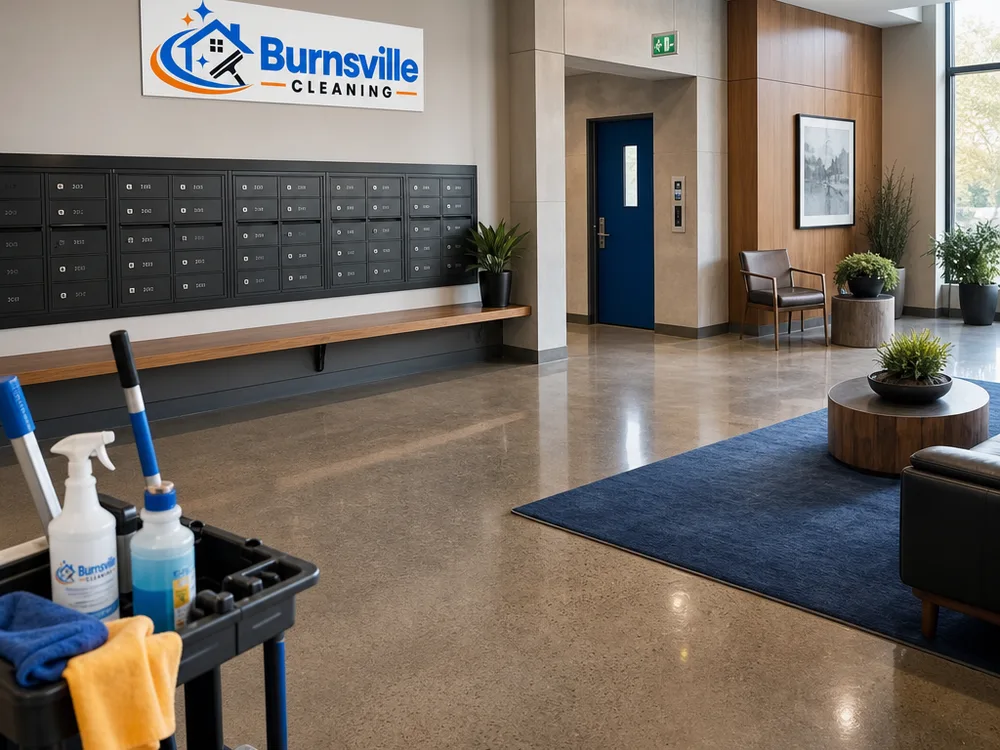
Retail lighting is designed to make merchandise look its best, and it makes everything else look worse. The same fixtures that flatter a display also pick out every scuff on the floor, every smudge on the entry glass, and every dust line along a fixture base. A store gets judged under those lights all day.
Burnsville Cleaning scopes retail around traffic and trading hours. Entry areas and main aisles carry many times the footfall of a back corner, so they get weighted accordingly rather than averaged into a floor-area number. Work happens before open or after close, because a cleaning cart in an aisle costs sales.
Shopping centers add a second layer: the boundary between what a tenant is responsible for and what the center covers. That line is worth establishing before anyone quotes, because tenants routinely pay twice for common-area work already covered by their CAM charges, or assume a walkway is covered when it is not.
A retail scope follows the customer path: the entry, the main aisle, the areas where people stop and handle merchandise, then the transaction point and the spaces behind it.
A typical retail or center scope covers:
Retail commonly pairs a nightly route with periodic heavier work: janitorial services for the routine, floor care for sales-floor hard surfaces, and window cleaning for storefront glass.
Bright, angled retail lighting picks out floor scuffs, glass smudges, and dust on fixture bases that would go unnoticed under ordinary office lighting.
An entry and main aisle can carry ten times the footfall of a back corner. Weighting the route to match beats spreading the same effort evenly across the floor.
A fitting room is a small enclosed space a customer inspects closely. Mirrors, bench surfaces, floor corners, and stray pins or tags all register immediately.
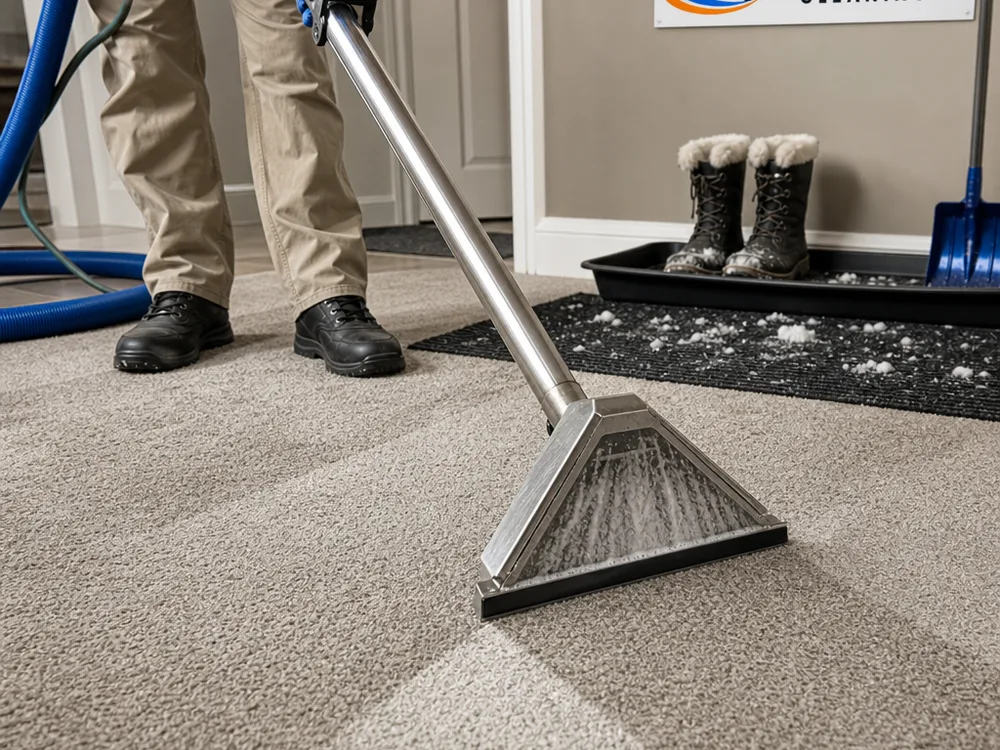
Grit stopped at the door never reaches the sales floor. Proper matting and frequent mat servicing protect every hard surface behind it, especially through a Minnesota winter.
Holiday trade, back-to-school, and sale events multiply traffic for defined periods. The route should flex for those weeks rather than holding a flat annual frequency.
In a shopping center, walkways, shared restrooms, and exterior glass are often covered by CAM charges. Establishing that line prevents paying twice for the same work.
We walk the store when it is closed, note floor types, traffic patterns, fitting room count, and where the customer path concentrates footfall.
You get tasks by area and frequency with entry and main aisles weighted for traffic, plus a clear note of any common areas the center already covers.
We confirm how the crew gets in, alarm procedure, whether a manager is present, and any loss-prevention requirements your store or center enforces.
The crew works your window, before open or after close, so no cart or equipment is ever on the sales floor while customers are shopping.
Holiday and sale periods get an adjusted frequency agreed in advance, rather than the route quietly falling behind during your busiest weeks.
Retail cleaning in Burnsville commonly runs about $150 to $600 per visit depending on floor area and fitting room count, putting a single store on a nightly route somewhere near $800 to $3,000 per month. Smaller boutiques cleaned three times weekly often land closer to $400 to $900 per month.
Cost follows sales floor area, customer entrance count, fitting room count, restroom count and footfall, floor type and condition, whether stockrooms and back-of-house are in scope, and how many nights per week you need. Seasonal frequency increases are quoted separately so your base rate stays stable.
If your sales floor looks tired under the lights by mid-morning, the problem is usually entry control and traffic weighting. Get a walkthrough and a re-scoped route.
Request a CallbackEither works, and some stores prefer early morning because the floor looks its best at open rather than having sat overnight. We confirm your access arrangements, alarm procedure, and whether a manager needs to be present. The important thing is that the work happens outside trading hours, since equipment on a sales floor costs you sales.
As their own scope item, because they are small enclosed spaces customers inspect closely. That means mirrors, bench surfaces, hooks, floors, and the corners where pins, tags, and hangers collect. Stores with high fitting room turnover often want these checked more frequently than the general sales floor, which we set as a separate frequency.
Worth settling before anyone quotes. Common walkways, shared restrooms, and exterior glass are frequently covered by your CAM charges, while everything inside your lease line is yours. Tenants often pay twice for common-area work they already fund, or assume a service is covered when it is not. Tell us what your lease covers and we scope only your side of it.
Yes, and we recommend planning it in advance rather than reacting. Holiday trade, back-to-school, and major sale events multiply footfall for a defined period, and a flat annual frequency falls behind during exactly the weeks when appearance matters most. We agree an adjusted schedule for those periods and return to the base route afterward.
Interior glass and door hardware are part of a standard retail route, since they carry every customer's handprints. Exterior storefront glass is usually a separate service on its own frequency, and in a shopping center it may fall under the center's responsibility. We confirm which applies during the walkthrough so you are not double-covered.
Entry control is the whole answer. Salt and sand that get past the door spread across the entire floor and abrade hard surfaces and carpet as they are walked in. From November through April we increase entry matting attention, mat vacuuming, and spot mopping near doors, which protects the rest of the floor far more effectively than cleaning it more often.
We carry commercial liability coverage and can provide a certificate before work begins. If your store or center requires background checks, badge access, loss-prevention briefings, or sign-in procedures for vendors, tell us during the walkthrough and our crews complete that before the first visit.
Tell us your floor area, fitting room count, trading hours, and whether you are in a center with CAM coverage. We will walk the store closed and give you a traffic-weighted written scope.
Request a Quote
Send the details and we will come out for a walkthrough, then put a written scope and price in front of you.